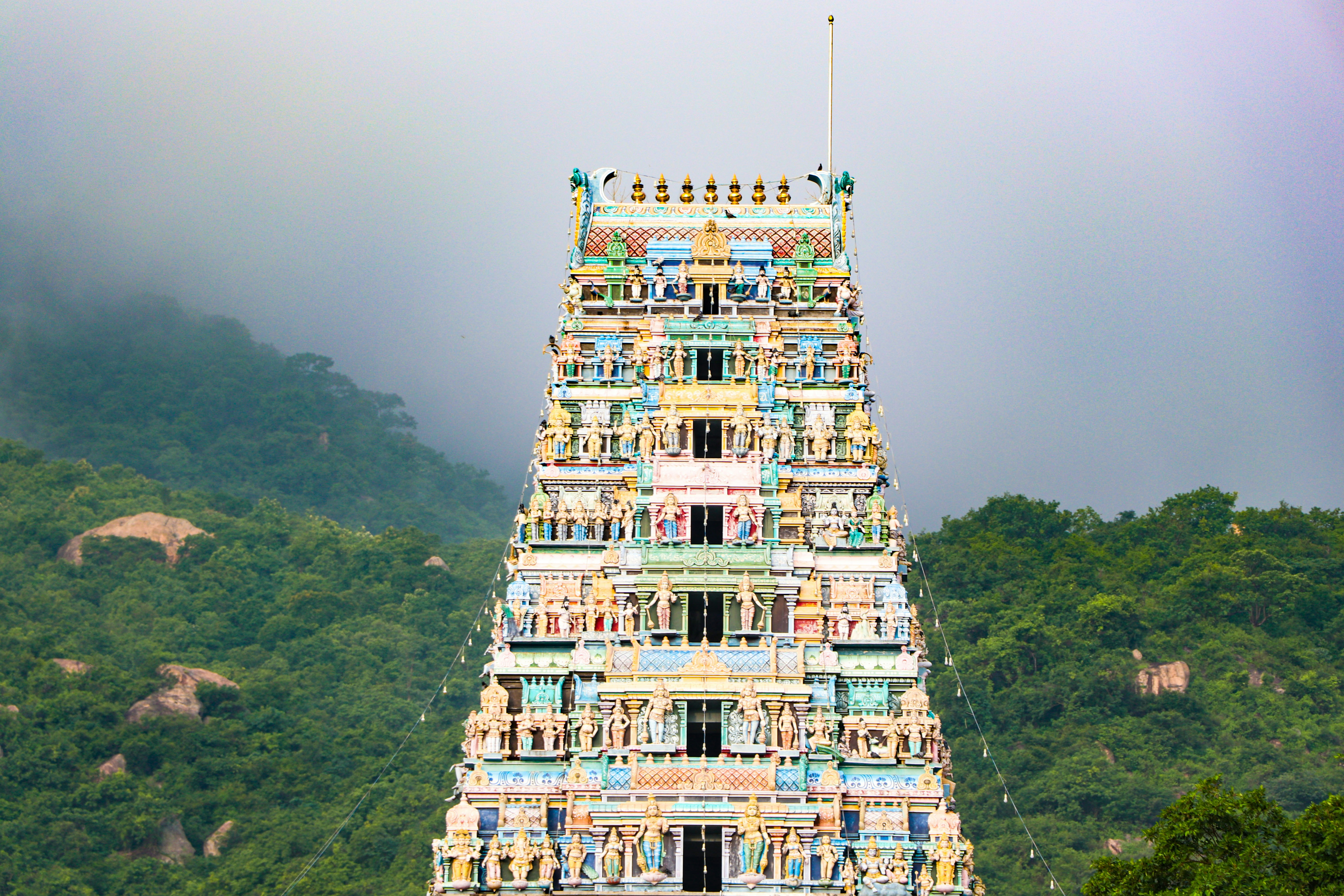
Welcome to the Abode of Lord Annamalaiyar
Nestled at the foothills of the sacred Arunachala Hill, the Arunachalesvara Temple stands as a magnificent testament to the spiritual and architectural richness of South India. Revered as the abode of Lord Shiva, known locally as Annamalaiyar, this ancient temple draws devotees and tourists alike into its serene embrace. The temple is not only significant for its religious importance but also for its stunning visual appeal, draped in a warm palette of saffron, gold, and maroon, which reflects the vibrant traditions of Indian spirituality.
The temple’s grand entrance, marked by intricately carved gopurams (gateway towers), invites one to step into a realm filled with devotion and tranquility. As visitors approach, they are greeted with captivating views of the temple, set against the majestic backdrop of Arunachala Hill, which many regard as a powerful spiritual symbol of Lord Shiva. The hill itself, with its rich geological history and sacredness, enhances the ethereal atmosphere surrounding the temple.
Upon entering the premises, the air thickens with the aroma of incense and the sounds of melodious chants echoing through the halls, creating a multi-sensory experience that captivates the heart and soul. The tagline ‘Arunachala Shiva’ resonates deeply here, reminding all who visit of the profound spirituality this location embodies. The Arunachalesvara Temple not only serves as a religious hub but also as a historical monument that encapsulates centuries of culture, devotion, and artistic excellence.
This tranquil environment prepares visitors for a deeper exploration into the temple’s rich history and significance. Surrounded by the ethereal beauty of the landscape and the palpable devotion of its followers, the temple stands as a beacon of peace, inviting all to experience the serenity of Lord Annamalaiyar.
The History of Lord Annamalaiyar
The history of Lord Annamalaiyar is intertwined with rich mythology and significant spiritual narratives. Central to this narrative is the legendary story of the Agni Lingam, an infinite fire pillar that emerged from the divine realms to resolve a dispute between two prominent deities: Lord Brahma and Lord Vishnu. Each deity sought to prove their supremacy over the other, leading to the manifestation of this towering pillar of flame, symbolizing Lord Shiva as the ultimate supreme deity.
This event is more than just an illustration of divine rivalry; it establishes a crucial tenet of the Shaivite faith, which venerates Lord Shiva as the primordial force. The Arunachalesvara Temple, dedicated to Lord Annamalaiyar, is situated at the foot of the Arunachala hill. As one of the Pancha Bhoota Sthalams, it epitomizes the fire element, signifying not only the physical but also the metaphysical aspect of Lord Shiva. The fire element is a powerful symbol of transformation and purification, inherently linked to the essence of the universe and human existence.
Furthermore, the act of meditating on Arunachala is believed to bestow seekers with liberation (moksha), a core aspiration within Hindu philosophy. Devotees often recount experiences of profound spiritual awakening while contemplating the sacred hill. For many, thinking about Lord Annamalaiyar serves as a reminder of one’s spiritual journey and ultimate liberation from the cyclical nature of birth and death.
In the context of this rich heritage, the significance of Lord Annamalaiyar transcends worship; it becomes a conduit for personal and collective growth. The temple and hill stand as perennial symbols of divine presence, drawing numerous devotees, pilgrims, and spiritual seekers from around the world, all yearning to connect with the deeper truths of existence and discover the essence of their being.
The Historical Significance of Arunachalesvara Temple
The Arunachalesvara Temple, nestled in the sacred town of Tiruvannamalai, has a rich and profound historical background that dates back to the 9th century. Constructed during the reign of the illustrious Chola dynasty, this temple is an emblem of devotion and architectural brilliance. The temple has not only served as a spiritual haven but also as a significant cultural landmark that has evolved remarkably over the centuries, with numerous expansions and renovations undertaken by various dynasties.
One of the primary attractions of the Arunachalesvara Temple is its famous rituals, particularly Girivalam, which involves the circumambulation of the Annamalai Hill. This practice draws thousands of pilgrims annually who seek to immerse themselves in the divine energy of the hill, believed to be a manifestation of Lord Shiva. Additionally, the temple hosts grand festivals, such as Karthigai Deepam, where a massive beacon is lit atop the hill, symbolizing spiritual illumination and devotion.
The architectural grandeur of Arunachalesvara Temple is characterized by its magnificent gopurams, or gateway towers, which are renowned for their intricate carvings and detailed craftsmanship. These towering structures not only enhance the temple’s visual appeal but also reflect its historical and cultural significance. Visitors are often mesmerized by the sheer scale and artistry of these gopurams, which stand as a testament to the temple’s long-standing legacy.
The Arunachalesvara Temple remains a central pillar of spiritual significance, drawing devotees from far and wide. Its historical narrative is woven into the very fabric of Indian culture, making it more than just a temple; it is a symbol of worship and reverence, guiding the faithful on their spiritual journeys.
Temple Information and Visitor Experience
The Arunachalesvara Temple, dedicated to Lord Annamalaiyar, is an iconic pilgrimage site located in the town of Tiruvannamalai, Tamil Nadu. Renowned for its architectural grandeur and spiritual significance, the temple attracts numerous devotees and tourists alike. The temple is situated at the base of the sacred Annamalai Hill, which enhances its serene atmosphere and offers a breathtaking backdrop for visitors. The temple operates from early morning to late evening, with specific timings for various rituals and ceremonies, allowing ample opportunity for worshippers to participate in the daily pujas.
When planning a visit, it is advisable to arrive early in the morning or later in the evening, as these times provide a quieter atmosphere, enriching the spiritual experience. The vibrant colors and intricate sculptures adorning the temple’s walls are designed to evoke a sense of peace and devotion. The use of warm tones throughout the temple contributes to the overall ambiance, inviting visitors to reflect and connect with their spirituality.
The Arunachalesvara Temple is designed to be accessible, catering to the needs of all visitors, including those with mobility challenges. Well-maintained pathways lead to various sections of the temple, and facilities such as restrooms and seating areas are provided for the convenience of pilgrims. Visitors will also find information centers that can assist with their queries and enhance their experience. Mobile-friendly aspects like the availability of guides and apps further facilitate navigation around the temple, ensuring that all guests can enjoy a fulfilling visit.
In conclusion, the Arunachalesvara Temple offers a unique blend of spiritual significance and visitor-friendly infrastructure, making it a must-visit destination for those seeking serenity and reflection during their pilgrimage.